A 5-Point Professional Services Thought Leadership and Brand Messaging Strategy

Nowadays, an effective brand messaging strategy involves more than accurate information and clean copy, AI slop or not. For instance, AI can explain what a law is, but can’t always pinpoint why your firm’s approach to cases is superior.

So, it makes sense to refocus from informational content to thought leadership that filters your unique expertise through your point of view. Or as Google’s Gemini might say, decision-makers buy from people with strong, proven perspectives, not encyclopedias.

Maybe you lack time to write or plan your content, let alone assemble it or post it. Then there’s the issue of whether anyone will see it or respond.

A hand holds a transparent panel with architectural blueprints, symbolizing a clear brand messaging strategy.

Even with a content creation roadmap, not everyone has a sense of direction. That’s OK, because a skilled creator and strategist like me can guide you.

But if you’re looking for affordable content marketing experts for thought leadership, a price-based approach might not serve you well. You need a content craftsperson — someone with the knowledge, experience, and proven track record of helping people like you reach your goals.

Even if it’s more of an investment than a purchase, the greater recognition and traffic you receive from working with a skilled guide can yield returns.

Here’s how a thought leadership content strategist can differentiate your content without relying heavily on AI, which can tarnish a professional service firm’s reputation.


  1. Thought leadership strategy – Copy that sounds like you — without the overused “It’s not about…”/”It’s about…” comparisons or unnecessary words like “actually” — speaks loudly. It’s your competitive advantage. It gets you seen as a leader in your industry.

What’s more important than cutting the robotic touch or em dashes is that your voice stays clear, setting the right tone for a conversation with your clients.

But churning out content without a plan can backfire. For example, when a firm uses generative AI to create and post five blogs a week to an online community, that can be considered spamming.

Forging a presence without such tactics combines thought leadership with a clear brand messaging strategy through careful, human oversight.

  1. Content governance – Liability and ethical safeguards have always been issues for professional service firms’ content — doubly so with the arrival of ChatGPT and its cousins. An aspiring writer can focus more on the words, but you might be more concerned about not being sued or losing credibility.

A strategic content partner manages the ethical and privacy concerns over feeding data to large language models (LLMs). That includes the issues of client confidentiality, avoiding biased or false data, and the principles of disclosure required in some industry advertising.

If an untrained freelancer or agency employee pastes your proprietary brief, case notes, or strategy into a public LLM (like ChatGPT) to write a blog, they might violate a non-disclosure agreement (NDA) or client confidentiality.

When AI goes unchecked, you face risks like these:

In a recent survey, 47 percent of marketers said they encounter AI errors several times a week, and 37 percent said incorrect AI content has been published.

A skilled strategist protects your firm by enforcing strict limits on the data you let near an AI prompt. I don’t use AI to write articles or longer-form content, and I comply with my clients’ wishes regarding privacy and AI.

3. Risk mitigation – AI hallucination rates can range from 15 to 52 percent. In regulated fields like law, accuracy is a rule of conduct. Hiring for “word count” means the owner still must spend valuable time fact-checking.

A content collaborator oversees reviews for accuracy, so the final draft is ready to publish. I’ve used AI to structure content and gather facts, which I always double-check. It’s part of my “AI-U” trust-but-verify process.

A five-step content framework could look like this:

  1. Draft
  2. AI help
  3. Human edit
  4. Compliance check
  5. Publish

For professional services, the “compliance check” is the most crucial stage.

  1. Content formatting and discoverability – Attractive visual elements make a message a “must see.” Part of that includes ensuring that content appeals to “answer engines” like Perplexity or Gemini.

Snippets with short bullet points or paragraphs or distinct descriptions make them more likely to cite you as a source.

  1. Strategic intent and audience alignment – An ability to see the “big picture” — how everything works — ties your plan together. It spans writing with empathy for your clients to knowing which content is more worth a rework than a repost.

AI can create loads of content for search, but the messaging could be weak. Seventy-three percent of consumers surveyed are less likely to buy when brand messaging is mixed or inconsistent.

The human edge: In my ghostwriting for law firms, I’ve found that mapping content to answer the “burning questions” their audience searches for boosts their click-through rates.

A brand strategist audits copy before publication to ensure it speaks in your brand voice and converts the traffic it attracts.

And unless you feed it detailed data, AI doesn’t know your ideal customer well — just statistical averages. It often ignores biases and relies on stereotypes because it can’t see through our eyes. A strategic partner helps define your target customer and maps content to the stages of the buyer’s journey.

Without a human thought leadership content strategist, reviewing, fact-checking, or rewriting AI-generated copy often takes more time — no matter your settings or prompts.

When you use AI to increase efficiency and sign off on its content, you’re accepting the consequences. But with a skilled human in the mix, you ensure your content gets the time, care, and attention it deserves to enhance your reputation.

Thought Leadership vs. Content Marketing Strategy FAQ

1. What is the difference between content marketing and thought leadership?


Content marketing spreads information that shows how you solve your clients’ problems, spotlighting your expertise to interest them in working with you. Podcasts, videos, blog and social media posts, e-newsletters, and websites are among the most common forms of content marketing.

Through the lens of your expertise, thought leadership gives your point of view on a topic — how you approach your work, what distinguishes you, and why clients should choose you over your competitors.

2. What is a content strategy for thought leadership?


A basic brand messaging strategy can start with an e-newsletter, which you use to feature your blog, video, or other updates, ideally, weekly, biweekly, or monthly. Regular social media posts can also promote the newsletter and other content. Each piece can then be findable in search or AI.

3. What’s an example of a thought leadership content strategy?


A thought leadership content strategy can earn recognition and raise your search visibility. A simple PR-based approach: take a quote from a recent article you wrote and post it to your social media and e-newsletter, or link to the article from your website.

4. What type of content works best for thought leadership?


Any content you post regularly can enhance your thought leadership, even if you start small with social media posts. From there, you could expand into writing a blog or regular columns or articles for publications, which can raise your profile beyond your network.

Find out what your brand messaging strategy lacks — before your competitors do.

When did you last read your own content and think, “That sounds like me”? Leave a comment below.

QUOTES

“Content is fire; social media is gasoline.”

~ Jay Baer, Marketing Strategist

“People don’t buy what you do; they buy why you do it.”

~ Simon Sinek, Author and Leadership Expert

5 Brand Voice Errors That Cost Customers: A Decision-Maker’s Playbook

If you sing that tagline that looks “pitch perfect” on paper in the wrong key, your brand voice will strike some sour notes.

That happens when:

  • You copy a competitor’s writing style
  • Too many writers spoil the broth
  • You use AI-generated copy “as-is”
  • You write like you think you should sound

Any person or AI can write content that passes spelling and grammar checks. But does it make sense? Are the chords you’re striking resonating with your audience?

If not, your writing voice might be missing a vital ingredient — authenticity — language your readers understand that sounds like you. That humanity — or lack thereof — can decide if your content marketing lives or dies.

Because your brand voice communicates your business’s unique tone and personality — it’s what makes you stand out.

Here’s how to breathe life into dull copy through writing in your own brand voice.

How to Write in Your Brand Voice to Stop Losing Authority to AI Noise

1. Failure: Messaging Derails at Scale

What it looks like: Different teams drafted proposals, web pages, and emails that sound exactly like they were written — by different people.
Why it costs money: Mixed messages erode credibility and can lower sales and response rates.

A butterfly-patterned teacup beside a vintage typewriter on a desk; tools for developing an authentic brand voice.

Before: “We know payroll.”
After: “We cut payroll errors by 80 percent.”

  1. Make a one-page brand voice cheatsheet that pinpoints a client outcome you deliver.
  2. Audit your content to spot message drift and fix top offenders.

Stats to track: response rate, conversion rate, sales cycle length.

2. Failure: Tone Mismatch

What it looks like: Copy sounds casual when buyers expect authority — or formal when buyers want warmth.
Why it costs money: A misaligned brand voice increases buyer friction; prospects bail because they don’t trust you.

Before: “We’re here to help and make stuff easy.”
After (for corporate buyers): “We reduce vendor risk with documented processes and a 30-day onboarding plan.”

Fix: Map 1–2 buyer personas → select a primary tone → spot the drift.

Stats to track: bounce rates and time on page by persona landing page.

3. Failure: Flunking the “Trust Test”

What it looks like: Grammatically correct content that lacks depth and details. It reads like it was generated, not genuine.
Why it costs money: Visitors can distrust robotic writing. Even if it ranks in search, it can fail to convert. Prospects bounce or second-guess credibility, especially in trust-based industries like finance, law, and consulting.

Before: “We help businesses achieve growth through innovative, client-focused solutions.”
After: “When your inbox overflows and revenue stalls, we help you spot what’s slowing growth — and fix it fast.”

Fix: Check for humanity — have a real reader mark any line that could have come from anyone.

The three-minute gut check:

  1. Could this sentence appear on a competitor’s site? If yes, make it personal (a client example or a unique process).
  2. Would you ever say it aloud?
  3. Does it reveal anything about your team or clients?

Add specifics: proof points, brand wording, and emotional cues (verbs, metaphors, sensory phrasing).

If it suits your brand voice, show some personality. “Being yourself” makes your writing lively and engaging — that includes aiming for a laugh now and then. Humor is sometimes tricky and subjective, but if you handle it well, it comes across well.

Don’t strain to sound like how you think you should sound. Otherwise, your writing might become stiff and formal, lapsing into the passive voice and businessese. Don’t catch those conditions.

Stats to track: Engagement: dwell time, scroll depth, and CTA clicks.

  • Scroll depth (aim: +20%)
  • Time on page (aim: +15%)
  • Conversion on content downloads or consultations (aim: +10–30%)

Prime Example

To spotlight the issue of homeless dogs and promote more adoptions, a Pedigree ad campaign informed listeners about the loyalty of a shelter pet. Pedigree promoted the bond by offering a welcome home care kit.

The ad ended with a question about whether a music streaming listener wanted to know what was included in the gift set. It encouraged a spoken reply, which could be understood through interactive audio advertising technology.

Those who expressed interest heard detailed information and were redirected to a landing page. For other answers, the ad told listeners how to learn more about supporting shelter pets. The approachable, yet energetic brand voice earned a 35 percent response rate.

AI can mimic form, but authentic explanations and storytelling in a human voice can outperform hype or cookie-cutter copy.

4. Failure: Jargon and Feature-First Content

What it looks like: Long lists of features, certifications, or acronyms — little about outcomes: proclaiming, rather than explaining.
Why it costs money: Buyers can’t see the result or return on investment (ROI), so they shop on price or delay the decision.

  • Before: “Certified X, API-integrated, SOC2 compliant.”
  • After: “Cut invoice processing time in half and free up staffing hours every week.”
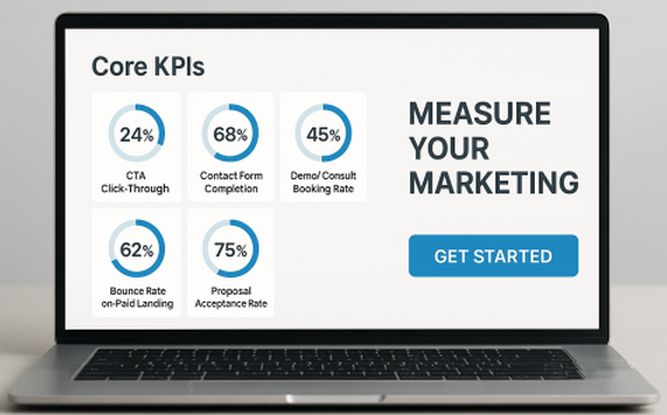
A laptop screen with KPI dashboard: CTR, form completion, demo bookings, bounce, and proposals.

Fix: Convert every feature bullet to an outcome sentence using the FAB formula: Features → Advantages → Benefits.

Stats to track: demo requests, time to first meaningful interaction, average deal size.

Example: Clarity and genuine tone outperform inflated marketing claims. MECLABS frames this as a scientific principle: messages that match the way teams naturally explain their value are more credible and convert at higher rates.

5. Failure: Weak or Missing Next Steps

What it looks like: Copy that doesn’t offer benefits or asks only to “Contact us.”
Why it costs money: Prospects who could click stop right there.

Before: “Contact us to learn more.”
After: “Book a free 15-minute voice audit and get one paragraph rewritten with notes for improvement.”

Fix: Add specific, low-risk calls-to-action (audit, sample rewrite, price ranges).

Stats to track: CTA click-through rate and audit-to-project conversion.

Writing in Your Own Brand Voice FAQs

When should I hire a professional writer versus doing it in-house?

If you doubt your abilities, hiring a pro (like me) can relieve the burden.

Hire a pro when:

▪️ You’re losing leads or conversions
▪️ You lack time for testing
▪️ You need a consistent voice across your content

If it’s a one-off page and you can do A/B testing, you can do it yourself. When in doubt, run the three-minute gut check first.

What key performance indicators (KPIs) should I track to know if a voice change improved leads?


Core KPIs:

▪️ CTA click-through rate (headline → contact)
▪️ Contact form completion rate
▪️ Demo/consult booking rate
▪️ Bounce rate on paid landing pages
▪️ Proposal acceptance rate

Which pages should I favor for a voice overhaul to get the biggest ROI?

What to fix first (biggest ROI, in order):

▪️ Homepage/Hero: The first impression; it affects many visitors and paid traffic. Measure: CTA click-through rate; contact form conversions.
▪️ Pricing/Services Page: Clears buyer friction and pre-qualifies leads. Measure: demo requests, time on page, bounce on pricing.
▪️ Primary Landing Pages (from ads or top-performing blogs): high intent; minor changes can multiply paid ROI. Measure: conversion rate, cost per lead.
▪️ Key Service Pages/Case Studies: These show proof and outcomes and help close. Measure: proposal requests and acceptance rates.
▪️ Sales/Proposal Templates & Email Sequences: Converts interested prospects into booked calls. Measure: reply rate, demo show rate.

How to choose between pages: score each page 1–5 on Impact (revenue upside) × Traffic (visitors) × Ease (time to implement); prioritize the highest total score.

How do I know when it’s time to rewrite instead of just edit?

▪️ Your conversions drop
▪️ Your tone or messaging is inconsistent
▪️ Your message no longer fits your brand direction

Get a rewrite-readiness score with a free content audit.

What deliverables and measurable results should a professional rewrite include?

A strong rewrite package ties scope to measurable outcomes.

▪️ Typical deliverables: a short audit of the existing page, 1–2 draft versions of the rewrite, on-request light SEO alignment (headlines, meta), and 1–2 rounds of revisions.
▪️ Process and timing: audit (1–3 days), first draft (3–7 business days), final delivery after revisions (depending on scope).
▪️ Measurable results to expect and test: headline → CTA click-through rate, contact form completion rate, demo/bookings, and bounce on paid landing pages.


When you sound less like AI and more like a person, the results will become clearer in more click-throughs or responses.

If you’re not used to showing up as yourself on the page, your first attempts can be rough. And if you haven’t thought through who your business is (or wants to be), you might not always know what your brand voice is — or how to write in it to get results.

That’s why following a guide or having someone there to show you can help your wording land with the right clients — those who will value you and your work.

Find out where to improve your brand voice.

What has helped you write in your own voice? Leave a comment.

QUOTES

“If you are not afraid of the voices inside you, you will not fear the critics outside you.” ~ Natalie Goldberg

“When you find your authentic voice, it’s like stepping into a comfortable pair of shoes. The rhythm and pacing of your words feel right, as if they’re meant just for you.” ~ Shirley Kawa-Jump

5 Steps to Write a Unique Selling Proposition, Value Proposition, or Tagline (Examples)

When you write a unique selling proposition (USP), is it the same as a tagline, a value proposition, or a mission statement? Not necessarily.

A kiosk selling magazines and newspapers with the sign "Kiosk Press" above it in green and gold.

A tagline and a proposition distinguish your products or services. A tagline, sometimes known as a slogan, is a concise and memorable form of your selling proposition. A mission statement defines why you’re in business.

By contrast and its original definition, by adman Rosser Reeves, a unique selling proposition is more benefit-oriented:

  1. “Each advertisement must make a proposition to the consumer…Each advertisement must say to each reader: ‘Buy this product, and you will get this specific benefit.’
  2. The proposition must be one that the competition either cannot or does not, offer. It must be unique–either a uniqueness of the brand or a claim not otherwise made in that particular field of advertising…
  3. The proposition must be so strong that it can move the mass millions, i.e., pull over new customers to your product.”

Some see a USP and a value proposition as the same. Compared to a USP, others view a value proposition as a more specific claim about the effectiveness of products or services.

Here’s how Nike, maker of athletic gear, has expressed their uniqueness through each type of messaging:

  • Unique selling proposition: “Nike delivers innovative products, experiences and services to inspire athletes.”
  • Value proposition: “Customizable performance or lifestyle sneakers with unique colorways and materials.” (Specific to their Colorways footwear)
  • Mission statement: “Bring innovation and inspiration to every athlete in the world.”
  • Tagline or slogan: “Just do it.”

The basic building blocks of a mission statement or a tagline may form your unique selling or value proposition.

See how to write a unique selling proposition (USP), value proposition, or tagline step-by-step–with examples.

How to Write a Unique Selling Proposition, a Value Proposition, or a Tagline

1. Consider your “how” – What do you do? What sets you apart from competitors? Which problems do you solve? Your personality and how you do business, combined with your expertise, make you “you.” They’re part of your brand.

Example: The Law Office of Brady Skinner: “The No B.S. Attorney.”

2. Hear your “who” – Who do you serve? Do you have special knowledge or experience that helps you help certain people?

Example: Arizona-based real estate divorce specialist Bob Adelfson helps people going through a divorce sell their marital homes.

3. Find your “why” – Why do you do what you do? Why does your work matter to you — and why should it matter to others? Which problems do you solve? Answering these questions helps customers understand why you can help them. This ties to your core brand values.

Example: Some doctors at the University of Texas MD Anderson Cancer Center were also cancer patients. Their experiences led them to feel more empathy for their patients. They also better understood the side effects of the treatments they prescribed.

Their knowledge and personal experience add to their “why” and differentiate them from providers who haven’t had cancer.

4. Add them up – How + Who + Why = Your Unique Selling Proposition (USP). This equation helped me create my new business USP and tagline.

Example: Quality custom content that boosts service firms’ brands to win the right clients.

A USP defines an aspect of your business that distinguishes it. Using two of the three parts of the USP equation (“how” + “why,” “how” + “who,” etc.), you may trim your USP to a tagline.

Example: Based on my USP, my tagline becomes, “Win the right clients with quality custom content.”

5. Take a step farther – Add a specific claim to your USP or your tagline to form your value proposition. The benefit can include the results customers may expect or will get from working with you.

Example: “15 minutes or less can save you 15% or more on car insurance.” (Geico)

What’s your unique selling proposition? Feel free to comment below.

QUOTES

“You’ve got to start with the customer experience then work backwards.”

Steve Jobs

“A unique selling proposition is no longer enough. Without a unique selling talent, it may die.”

Bill Bernbach

5 Ways to Define Your Core Brand Values to Get the Right Clients

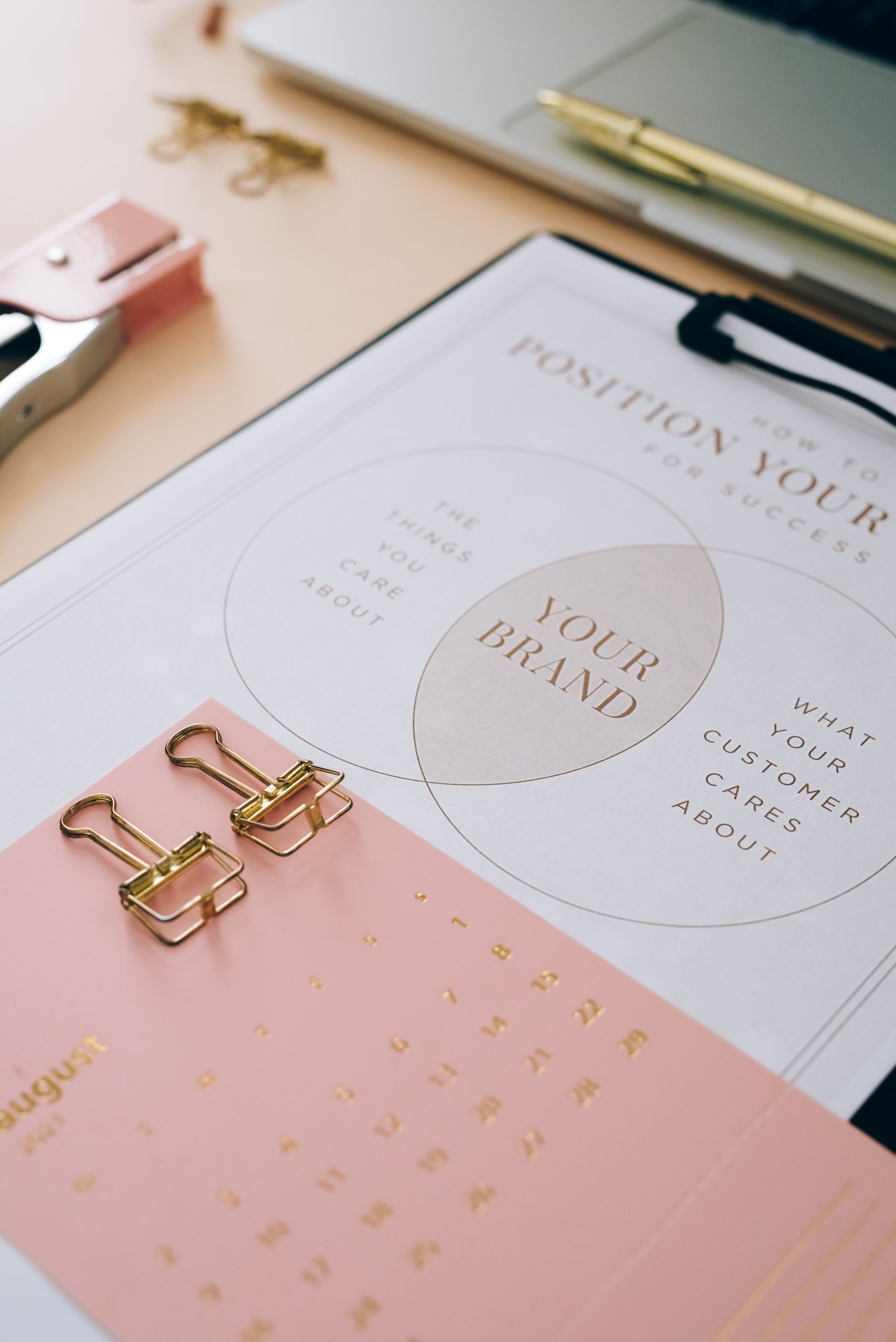
A piece of paper on a clipboard with a Venn diagram -- two circles with statements in them that define core brand values. They intersect at the phrase "your brand."

Do your core brand values define your business? The image it projects says a lot about it (and you). And the type of customers you gain. We can attract what we project. If you’re unhappy with your client base, maybe it’s time for a change.

One way to set your business apart is to define your core brand values in your marketing materials. Customers with similar views may be more likely to do business with you. 5WPR and Forrester reports show that 83 percent of millennials and 51 percent of Gen Zers want to buy from brands that share their values.

If you prefer to watch, rather than read, see this video playlist for a walkthrough of each step.

1. State your disbeliefs – Many businesses can’t serve everyone effectively. List ten values you or your business don’t believe in. A thesaurus or generative AI tools can help.

Questions to ask yourself include:

  • What are some things I can’t stand?
  • Based on any dealings with past clients, what did I dislike about the tough customers? Which types of clients did I fail to please?

Example: Service-based professionals can despise dishonesty, incompetence, or a lack of compassion.

2. List your passions – Consider the right clients for your business. Then think about the brands you admire. Explore your disbeliefs. List ten core brand values.

Questions to answer as prompts:

  • What are my “musts”? What drives or motivates me in my work?
  • What do I like best about my customers?
  • What are the values of brands I want my business to be like? Example: Apple is known for thinking differently, through innovation and user-centric design.

Service provider example: A hospital’s core values include safety, efficiency, and compassion.

3. Check your lists – Do you see any patterns? Are any words or phrases similar? Remove the repeats. Reduce the list to five core brand values.

4. Combine like terms – Tie together words and phrases that align with your brand values. Think of them as your “what.”

Example: Some of my clients appeal to their customers through compassion, so my marketing copy includes statements like “Content that connects with respect.”

5. Flesh them out – Consider why you follow each belief. Describe how you fulfill each core brand value in one sentence each.

Example: A mental health provider could list the phrase “a commitment to care.” They might then define how or why they follow that belief through this statement: “Our therapists guide our clients to reach their own conclusions.”

What are some of your core brand values? Feel free to comment below.

QUOTES

“If people believe they share values with a company, they will stay loyal to the brand.”

Howard Schultz, former CEO of Starbucks

5 Steps to Consistent Brand Messaging, Language, and Style

1. Check your mission statement – Ask yourself some questions to explore your brand messaging, language, and style: Why are you in business? What are your core values? What’s your Unique Selling Proposition (USP)? If you have one, borrow keywords from your mission statement. Otherwise, follow the next step and create one through finding your “why” to keep your brand messaging, language, and style consistent.

2. Make it personal – Who do you want to reach? Think of the people you want to appeal to when you write your content, their problems, or what might keep them awake. In the process, you could have a story to tell. Add keywords and descriptions from it to your tagline, your website or blog copy, social media, press releases, and other marketing materials.

3. Find your voice – What kind of tone or mood do you want to convey in your marketing? What voice will you use to speak to your ideal customers? What kind of personality do you want to project? And does it align with your mission statement and values? Thinking about these aspects can help you arrive at more specific wording that can increase your brand recognition and form your overall messaging.

Example: In a brief video, Michael Monteforte, Jr. of Monteforte Law P.C. tells potential clients what motivated him to pursue estate planning, how he works with clients, and helps them. Also on their “About Us” page, the firm effectively explains what separates it from others; many firms don’t differentiate themselves from their competitors well. Michael comes across as a plain-spoken, clear communicator who cares about finding the right solutions for his clients.

4. Create a company style guide – It can help you clarify your wording, punctuation, email formatting, and other content, which can guide you or any employees. It may also set your design standards, from the logos and fonts to the colors you use. Update it regularly.

5. Enforce company communication policies – Once your style guide is in place, include it as part of an overall communications policy to ensure all your messaging stays on brand. Don’t stray from your talking points, which form the image you want to project. Do regular content or messaging audits. Your communications policy may also outline strategies for responding to a crisis.

Need help with your messaging to build your image and boost your success? Consider a free business writing coaching consultation.

BOOK A COACHING SESSION

How do *you* keep your brand messaging consistent? Feel free to comment below.

Quotes

“Define what your brand stands for, its core values and tone of voice, and then communicate consistently in those terms.” ~ Simon Mainwaring

“If you don’t give the market the story to talk about, they’ll define your brand’s story for you.” ~ David Brier

Published Feb. 7, 2023