5 Business Newsletter Writing Best Practices

When you make e-newsletters, which I’ve done for more than ten years, you can overlook some business newsletter writing best practices. Some, like privacy rules, require legal compliance. Others, like the format, can affect a newsletter’s overall impact.

Follow these steps to create emails that comply with commonly accepted standards and build engagement.

See these videos for a more in-depth view of each step described in this blog.

1. Have a plan – Studies show people read online content in an F-shape. They focus on the top and the left side, reading from left to right.

a digitally enhanced human eye surrounded by futuristic data visuals and red targeting lines, symbolizing the focus and precision required in business newsletter writing best practices.

They also tend to scan or skim emails. As email marketer Des Brown suggests, when you create an e-newsletter, consider:

  • scannability
  • visual hierarchy
  • reading patterns

Structure your content accordingly.

Many email marketing platforms offer mobile-friendly templates you can adapt to your style. Especially if you’ve never created an e-newsletter, compiling one is like guesswork. See what to add and where for prime engagement with The Easy 5-Step Business E-Newsletter Template.

2. Consider the format – Beyond planning and structure, a regular format eases creation.

Service provider e-newsletters often start with a “welcome” message, followed by one or two main articles, and then end with an offer. One section usually features a blog.

The listicle format has helped me keep creating e-newsletters for 11 years. Sticking to five key points saves me time, preventing me from driving down dead ends. 

3. Foster ideas – I love to pre-crastinate, gradually adding ingredients to my pot of soup. I log ideas or snippets whenever inspiration strikes. 

Whether you use an online scheduler or a spreadsheet, a three to 12-month content calendar can keep you organized. Apps may remind you about deadlines.

As you consider topics, explore how to save time and how your emails fit into your overall marketing strategy: 

  • Curate content from sources like industry news websites using tools.
  • Reduce, reuse, and recycle: Reinvent any existing content (blog posts, video, press releases, white papers, etc.). Link back, summarize, or rephrase. 

4. Catchier content – Most e-newsletters are educational, selling more subtly than email marketing campaigns. 

Eye-catching headlines, body copy, and calls to action are crucial. The subject line is the first thing people see and influences whether they will open an email.

Example: How to protect, preserve, and pass on your wealth by design (Sundvick Legacy Center)

Content that engages is not only useful or persuasive, but relatable. Sharing your stories in your own voice, like what works and what hasn’t worked for you, shows you as a person, not a bot. Your unique experiences help you stand out.

5. Privacy compliance This is an important business newsletter writing best practice. During a recent e-newsletter review, I was surprised at least ten percent of the U.S. companies’ footers didn’t follow CAN-SPAM rules. Some had “unsubscribe” links in low-contrast colors, making them hard to see.

Other CAN-SPAM aspects to note for commercial emails:

  • identify ads
  • don’t use deceptive subject lines

CASL (Canadian Anti-Spam Law) and GDPR (General Data Protection Regulation; Europe) require similar compliance.

See where to put your e-newsletter content–save time and gain results

What are some of your favorite e-newsletter best practices? Feel free to comment below.

QUOTES

“Create a questionnaire of common information you need to know from clients to put together an e-newsletter. Also, have a template where you can fill in the blanks of what they can discuss, depending on the type of newsletter (sale vs. announcement vs. new service, etc.). Organization and planning can help make the writing process go smoother and faster.”

Ashley Romer, SEO Manager, PaperStreet Web Design

“Your newsletters should include a variety of elements (blogs/articles, videos, podcasts, upcoming events, etc.). Balance consumable content with promotional content to maximize value for the recipient.”

Harvard University Brand and Visual Identity Guidelines, “Email Newsletter Best Practices

5 Email Marketing Trends to Automate Your Business Email Creation

Do you know how email marketing trends like user-generated content and personalization can enhance your messages and engagement? 🤓

You might be familiar with some of the latest advances, but others might be new to you because they’re not standard practice yet. These are among the trends that can reshape your email content landscape and conversion rates.

For an in-depth look into all five email marketing trends and how they can refine your content creation, see the videos in this playlist.
An example of an AMP-enabled email from email marketing platform AWeber.

1. Interactivity: AMP (Accelerated Mobile Pages), a Google framework, brings activities like completing forms and game playing to emails. E-commerce and subscription sites like Finish Line and Booking.com have used it, but any business can leverage it for engagement. Another, lower-tech option (with or without AMP) is user-generated content (UGC).

AMP: With features like AMP List, you may automatically update product listings and remove old offers. AMP Accordion hides or expands content like FAQs and product information. AMP also animates “call-to-action” buttons.

Google offers AMP to software developers, but many email service providers/platforms (ESPs) don’t currently support it. (AWeber, MailChimp, and MailModo are among the AMP-enabled platforms.) AMP-capable ESPs often feature limited versions like design features in their template builders. Also, it’s incompatible with some non-Gmail clients.

UGC: With this and other creative email marketing trends, you may spur readers to act through methods like:

  • Requesting a review after a purchase
  • Asking readers to complete a survey

2. Personalization: Go beyond adding subscribers’ names to emails or segmenting your list by audience with custom customer-focused content. Amazon, Starbucks, and other vendors have used predictive personalization based on customers’ locations and other data to forecast content or products that appeal to them. 

Example: A sporting goods store emails a discount on a parka to a buyer who lives nearby and recently bought thermal insulated gloves.

AMP also enables personalization through collecting data directly from surveys, forms, and other content in emails. 

3. Accessibility: Emails continue to become more text than image-based. Easy-to-read fonts and complementary colors are among the elements that make them accessible, especially for readers with visual and cognitive conditions. 

Litmus reports that in 2022, an average of 35 percent of people read emails in “dark mode,” with dark backgrounds against lighter-colored text. 

To ensure everyone can read your messages, check if the text is clear. Browser add-ons such as WebAIM’s WAVE and tools like EXPERTE.com’s Accessibility Check test if the elements of emails meet accessibility standards. The EXPERTE.com tool works like the accessibility checker in Google’s PageSpeed Insights except it scores and assesses every major page at a website.

4. Automated content: Artificial intelligence (AI) tools in ESPs let people create images and email copy. Leading providers Constant Contact and MailChimp are among those that now offer AI assistants. (MailChimp’s Email Content Generator is available only to their standard and premium plan users.) Creators who cull content from other sources can use apps like: 

  • Wordtune: Summarize content from a website address. 
  • Claude: Cut and paste content into the platform and prompt it for a summary. 
  • FeedlyThrough its Leo tool, this RSS reader lets you pull online content based on your reading history and keyword alerts. 
  • Google Alerts: Save keyword searches for relevant news articles
  • Web browser extensions that aid content curation

5. Automated content curation: For a fee, ESPs like rasa.io and Futurescope offer in-platform content curation. 

Rasa.io pulls content from various sources like blogs and social media accounts. Its AI automation tool will then sift through the content, and based on users’ clicks, customize a message for them. Futurescope lets you choose a topic or industry to create brand-specific content.

What’s your favorite email marketing trend? Feel free to comment below.

QUOTES

“I see interactive as a huge shift in email development. Early analytics have shown far greater engagement from users who receive interactive messages.”

~ Mark Robbins, Email Developer, Rebelmail

“Content curation involves finding other people’s good stuff, summarizing it, and sharing it. Curation is a win-win-win: you need content to share; blogs and websites need more traffic, and people need filters to reduce the flow of information.”

~ Guy Kawasaki, The Art of Social Media: Power Tips for Power Users

5 Steps to Write a Good Newsletter Article for Business


A "mail" icon on a computer screen. Testing how your emails look in email software can help you write a good newsletter.

1. Explore Your “Why” to Get to Your “What” – Businesses usually send newsletters to get more leads. How do you write a good newsletter article? If you know why you’re sending a newsletter and have already decided on a theme for it, fit your article into that overall topic. Otherwise, brainstorm subjects based on any existing customer data or what’s trending.

To refine your topic, link your article goals to the different stages of the buyer’s journey: Awareness, Consideration, and Decision-Making. Artificial intelligence software can prompt ideas that align with your customer data and your goals, too. 

2. Finding the Format: Another Way to Generate an Engaging Topic – Narrowing down the subject refines the article template. The format may also frame the topic. Common newsletter articles include:

  • A news brief
  • An editor’s or “welcome” note
  • A teaser for a blog post

3. Consider Storytelling – Your article should be useful, or in marketing terms, offer value. To help readers identify with you, tell a story. Michael Katz, who teaches professionals how to understand marketing, details his storytelling method effectively. To find good stories, list interesting things you saw or experienced recently, such as a colorful rainbow or a fun trip. Think about experiences you’ve shared.

Tie one to a useful business lesson or insight connected to your expertise. Then describe the experience, elaborating on the lesson. 

Example: HORNE newsletter: Uphill Goals and Downhill Habits

4. Get Organized – Newsletter articles tend to be brief and pull text from other sources, like blogs or landing pages. Research, is easier before you draft an outline. As you plan the beginning, middle, and end, outside of listicles, consider the basic AIDA format (Attention, Interest, Desire, and Action). When you write, follow the guidelines outlined in the AMA Handbook of Business Writing, which include using a title that attracts curiosity and short, focused paragraphs.

5. Prepare Your Article – To apply the finishing touches, edit and proofread and check for scannability and accessibility. Ensure the content has breathing room and that it follows a logical order throughout.

This is a shorter version of How to Write a Newsletter Article, which covers the process more in-depth and features advice about using artificial intelligence and interesting quotes.

How do you write a good newsletter article? Feel free to comment below.

Quotes

“You can’t go wrong by providing value to your readers. If you know your readers well and you have expertise that can help them solve some of their common problems, email newsletters are a great place to share that expertise. But make sure to provide content that is truly unique and informative. You want to make sure you’re offering value and not adding to the clutter.” ~ Kathy Bryan, Electives

“A personal story is effective because you can tie it into writing a newsletter article effortlessly.” ~ Carmine Mastropierro, How to Write a Newsletter: Step-by-Step Guide

Comments? Suggestions? Need help with your communications? Contact me.

How to Write a Newsletter Article for Business Step-by-Step

Knowing how to write an article for a business newsletter is one thing. Writing one people finish reading is another. Adding your brand voice and personality helps your business e-newsletter stand out.

This article assumes:

  1. That you want to write a short e-newsletter article.
  2. That you know your target market.

Let’s walk through five steps, from finding topics to the writing process from start to finish. See the video below for key highlights.

Writing a newsletter can be time-consuming. If you don’t know how to make a newsletter article, consider my email marketing packages or get a free audit.

Get a Free Easy 5-Step Business E-Newsletter Template

How Do You Write an Article for a Company Newsletter?

How to Write an Article for a Business Newsletter: Quick Takeaways

  1. Explore Your “Why” to Get to Your What: If you lack ideas, research any existing customer data or what’s trending, brainstorm, or try AI. Refine your topic using the buyer’s journey stages: Awareness, Consideration, and Decision-Making.
  2. Finding the Format: Choose a simple, focused format — an editor’s note, news item, or blog teaser — to save time and ease writing.
  3. Keeping It Interesting and Useful to Hook Readers: Tell a story based on one of your experiences. Tie it to a useful business lesson or insight, then elaborate.
  4. Getting Organized: Consider your article’s structure. If you use AI content, add your brand voice, style, and tone. How to write a newsletter article about an event: remember the 6 “W’s” and the “H.” For internal articles, focus on your audience, purpose, tone, and style.
  5. How to Write a Company Newsletter Article: Edit, proofread, and check for scannability and accessibility.

For more highlights, catch the condensed version of this article.

1. Exploring Your “Why” to Get to Your “What”

Businesses usually send newsletters to get more leads. If you know why you’re sending your newsletter and have a theme, fit your article into that overall topic.

Otherwise, to find a topic for a one-article newsletter:

Ponder what appeals to your readers. Explore any existing data, like:

  • Sales records
  • Reviews
  • Website analytics or social media metrics

What’s trending in your niche? Also, ponder what people tend to ask, complain, or rave about. Keyword research, questions on social media, and customer surveys can yield more insights.

GatherContent suggests more ways to find audience-relevant content ideas.

Artificial intelligence might save brainstorming time. AI can prompt topic ideas, though you’ll want to filter them for relevance to your audience and your goals.

The following advice can help you screen unsuitable topics.

Jump ahead and get organized to start writing.

Is a Newsletter an Article?

It can be.

Fenwick suggests an e-newsletter should average 300 or fewer words total — about the length of an article. Constant Contact says an e-newsletter should be “as long as it needs to be,” though their data shows that 20 lines of text, about 200 words, yields the highest click-through rate for many industries.

Many business newsletters contain around 300 to 500 words of content, though most you receive are probably longer.

Newsletter articles tend to be brief and draw from other sources, like articles or landing pages. For longer articles, an option is to post a summary with a link to the full piece.

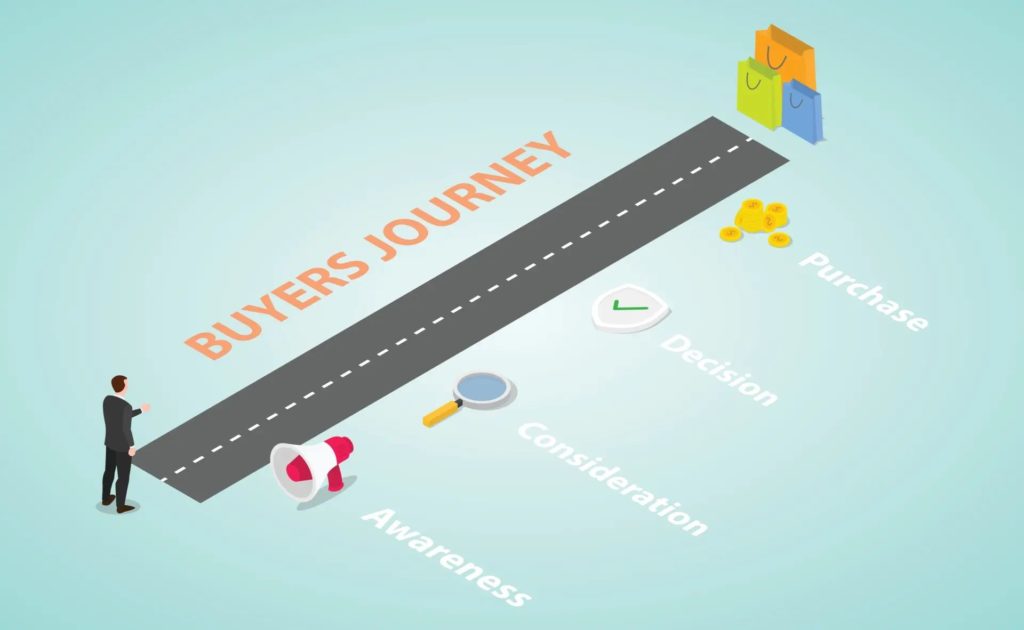
A diagram of the buyer's journey illustrated as a road from "Awareness" to "Purchase." This information can be helpful in learning how to write a short article for a newsletter.
A diagram of the buyer’s journey shown as a path from “Awareness” to “Purchase.” Courtesy of Vecteezy.

To enhance lead generation and narrow your topics, as HubSpot recommends, link your article goals to the buyer’s journey stages: Awareness, Consideration, and Decision-Making.

  • Awareness: Introduce your business, staff, mission, and offerings. Highlight new products or events to familiarize customers with your brand.
  • Consideration: Customers are comparing options. Provide information that helps them decide, like a “how-to” article showcasing a product or service.
  • Decision-Making: Customers are ready to buy. Show them the benefits of choosing your business to influence their decision and encourage them to contact you.

This approach subtly sells by informing your customers about your products and services.

2. Finding the Format: Another Way to Generate an Engaging Topic

Knowing your goal and the buyer’s journey stage leads to your subject matter. Narrowing down the subject refines the article template. The format may also frame the topic.

Newsletters in niches like finance, AI and tech, health and wellness, and personal development grow 27% faster with 2.3x higher ad revenue due to focused content strategies.

What’s a Business Newsletter Article Example?

Common newsletter article examples:

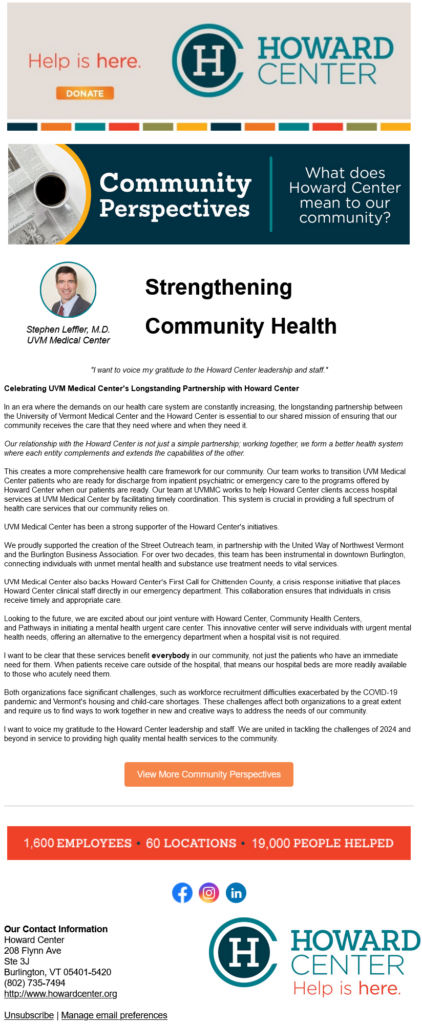
An issue of the Howard Center e-newsletter featuring one article -- an example of how to write an article for a business newsletter.
  1. An editor’s or “welcome” note: example: Sundvick Legacy Center
  2. A short news item: sample: Dwyer, Spino & Goncalves newsletter
  3. A teaser for a blog post that links to the full piece: examples: DFD Russell Medical Center newsletter; Aviva Senior Living newsletter; HORNE newsletter

These formats are simple enough to write with little planning, saving you time and energy.

More examples of company newsletter articles:

Often, e-newsletters feature one main article with snippets of text and links to more information.

  • The Howard Center e-newsletter (pictured) features a nearly 500-word article.

It’s among several strong healthcare newsletter examples. Learn more in What Are The Best Health and Wellness Newsletters?

Explore more: writing a newsletter article template.

“Consider leveraging content curation. Not every piece of content needs to be created from scratch. Sharing relevant industry news, case studies, or insights from thought leaders can add value to your newsletter without the heavy lifting of original content creation.

Tools like Feedly or Pocket can help you gather and organize relevant articles and information.”

Gabrielle Yap, Senior Editor, Carnivore Style

Curata reports that leading marketers use a mix of 65 percent created content and 25 percent curated content, keeping their output consistent without burning out.

3. Keeping It Interesting and Useful to Hook Readers: Consider Storytelling

Your piece should be useful, or in marketing terms, offer value. One way to deliver that and to help readers identify with you is through storytelling.

Stories boost retention to 65-70% (vs. 5-10% for stats alone) and make facts 22x more memorable.

Michael Katz, who teaches professionals how to understand marketing, details his storytelling method effectively.

To find good stories, list interesting things you saw or experienced recently, like a colorful rainbow or a fun trip. Tie one to a useful business lesson or insight related to your expertise. Then elaborate on the experience. Joey Havens does this well.

If you need inspiration, AI offers a head start. Edit any AI-generated output before publishing. Without specific guidance, it could spin some fiction about your business.

“One of the most effective ways to get people to engage with your e-newsletters is to personalize the content and ways you address the individual recipients. But this is very time consuming and difficult to do all on your own.

It can be helpful to use AI to create segmented lists and personalize messages in a fraction of the time.”

Dr. Jerry Friedman, Doctor of Dental Surgery, North Jersey Oral & Maxillofacial Surgery

Corporate Visions research shows that emails personalized to certain industries had 24 percent higher click-throughs and 50 percent more scheduled meetings. According to MailModo, AI can help you segment lists and personalize emails more efficiently.

Personalized content in newsletters increases perceived product value by up to 2,706% and conversions by 30%.

4. Getting Organized: Focusing on the Structure and Writing the Article Effectively

When you structure your piece, if it’s a “listicle,” number each step to simplify the format and scannability. Otherwise, as Chamaileon suggests, consider the basic AIDA format (Attention, Interest, Desire, and Action).

Business customers can be too busy to spend ten minutes reading your newsletter. Choose the length wisely while you keep your audience and what you might know about them in mind.

Should you try AI?

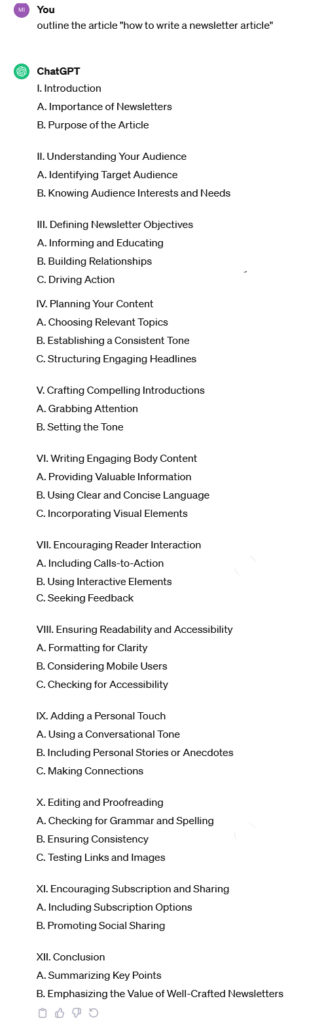
AI software can shortcut outlining, especially if you seek inspiration. For example, ChatGPT 3.5 created the pictured outline for this article.

If you’re weighing whether AI could help you, compare it to the structure of this post, which I wrote without AI. If I had given it a more specific prompt, ChatGPT might have gotten more creative.

25% of newsletter creators now use AI for content creation tasks like drafting copy, saving 1-3 hours weekly while maintaining a human touch.

How to Write a Short Article for a Business Newsletter

How to Write a Good Newsletter Article From Start to Finish: Key Takeaways

  • The beginning: How will you build attention?
  • The middle: How will you keep it?
  • The end: How will you inspire people to act?

The beginning: your opening sentence or paragraph — how will you build attention? Get to the point powerfully. State an interesting fact, quote someone, or drop us in the middle of a scene.

  1. Example #1: Information articles: This Sundvick Legacy Center newsletter‘s short editor’s note starts with the fact that October is National Estate Planning Month. It then leads into why it’s a good time to consider estate planning.
  2. Example #2: Storytelling: Set the stage. In this newsletter, Joey Havens begins with a description of a “blue and white object laying just in front of me” in a hotel lobby.

The middle: how will you build on the interest and desire you’ve generated? Add what readers should know next to spur them on. Use transitions to tie ideas or paragraphs together smoothly.

  1. Example #1: Informational articles: The Sundvick Legacy Center note leads into a statistic, then builds on it.
  2. Example #2: Storytelling: Joey signals he has reached the middle of the piece by revealing what he mistook the object for and what it was.

The end: how will you inspire people to act? Summarize any key points. If your goal is to gain feedback, ask a question.

Use a call-to-action (CTA) to entice readers to contact you or to visit a blog or a landing page.

MailModo’s 2023 State of Email report noted that CTAs with action verbs or featured offers performed best for them. If you’re not promoting anything, close with a simple “farewell.”

  1. Example #1: Informational articles: The Sundvick newsletter note urges readers to schedule a consultation before another year passes.
  2. Example #2: Storytelling: Joey closes by emphasizing that when we lack perspective, problems can look bigger than they are. Sometimes, it’s better to wait and reexamine them with fresh eyes.

As you write (or edit), heed the guidelines from the AMA Handbook of Business Writing.

Whether you start in the middle, write the end first, or the beginning last, just write. If you like, save the headline for last. Whatever you do, don’t judge your writing. Listening to your inner critic can stifle your writing; you could start to read what you’ve written and begin editing, which is a “no-no.”

Why? Because often it’s better to let your words rest or to “sleep on them” and return with a clearer view later. It’s like buying a cut-glass vase and spotting a chip in it once you’re home. The flaws become clearer after your mind has had a break.

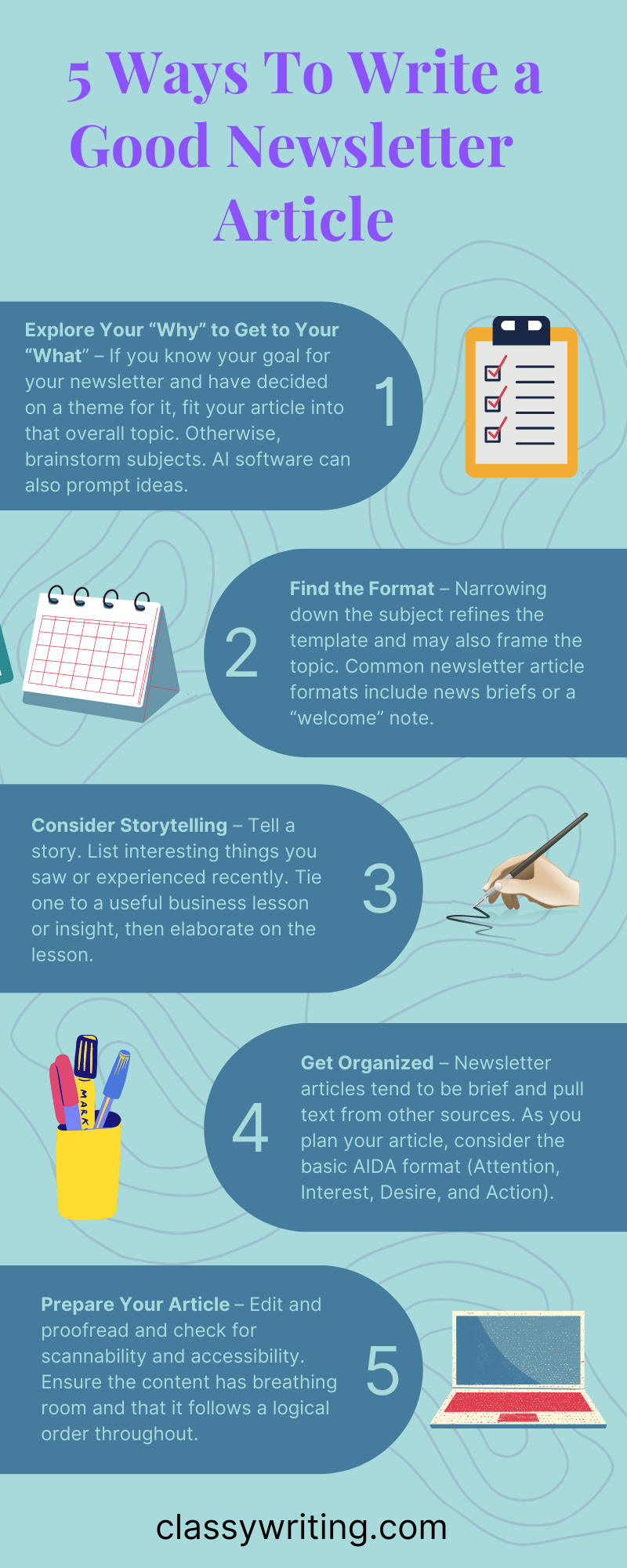
"5 Ways to Write a Good Newsletter Article" infographic that shows how to write an article for a newsletter.

What’s a Business Newsletter Article Example by AI?

This is part of 5 Ways to Write With Style, an article I asked Google’s Gemini to write. I didn’t use its content in the article.

Its style differs from mine. I’m less enthusiastic, for starters. 🙂

5 Ways to Write with Style and Captivate Your Audience (Like a Boss!)

Ever feel like your business writing falls flat? You’re not alone. Many business owners struggle to craft content that’s both informative and engaging. But fear not, fellow entrepreneur!

Here are 5 powerful ways to inject style into your writing and turn those website visitors into loyal customers…

The AI-generated edition is informative, however, the advice is found in similar articles. I aimed to find aspects of writing business owners might not always consider.

“You can’t go wrong by providing value to your readers. If you know your readers well and you have expertise that can help them solve some of their common problems, email newsletters are a great place to share that expertise.

But make sure to provide content that is truly unique and informative. You want to make sure you’re offering value and not adding to the clutter.”

Kathy Bryan, Head of b2b marketing, pathstream

Though AI can draft an article, the result could be bland or a poor fit for you or your business. If you use AI, as MarTech and SEMRush suggest, check facts or sources and edit the output to suit your brand voice, style, and tone.

How to Write a Newsletter Article About an Event Template

When you describe an event, keep in mind :

  1. The six W’s:

2. The H (“how”)

  • who / what
  • when / where
  • why / wrap-up

How Do You Write a Newsletter Article About an Event?

An issue of "The Dispatch" featuring a write up about TwitchCon Paris -- how to write a newsletter article about an event sample.

When you summarize an event, use a similar structure. Add quotes from the hosts, organizers, or attendees, along with the agenda and what you learned. Here’s a sample.

Reframe it as a “how-to,” highlight key takeaways, or try a first-person perspective.

Adding photos with captions helps readers visualize the experience.

Encourage readers to attend future events and offer incentives like exclusive content or “early bird” discounts. Provide resources related to the event topic, like research or speakers’ websites.

How Do I Write an Internal Newsletter Article?

The steps for how to write an internal newsletter article are similar to those outlined above, yet focus more on employees as your audience. Many of the topics to cover are like those in a newsletter for clients: news and announcements, upcoming events, co-worker/employee profiles, etc.

How to Write a Newsletter Article for Work: Points to Consider

FeatureInternal NewsletterCustomer-Facing Newsletter
Target AudienceEmployeesPotential Customers
PurposeInform, Engage, MotivateGenerate Leads, Promote Services
Tone and StyleInformal, ConversationalProfessional, Informative, Engaging
ContentCompany News, Achievements, EventsIndustry Trends, Case Studies, Resources
Call-to-ActionParticipate, Complete, Provide FeedbackLearn More, Download, Schedule Consultation
How to write a company newsletter article: what to consider.

More Resources:

When you plan your piece, consider:

  1. Scannability and Accessibility: Slice concepts into smaller parts for easier skimming with bullet points or numbers. Add images to break up text and make it more visually appealing. Ensure your content flows logically. Also, consider accessibility for people with disabilities: use short words, sentences, and paragraphs without jargon.
  2. Editing and Proofreading: polish your email for professionalism before you send: print it out, read it aloud in a flat voice, or have others check it to catch errors.

The Harvard University Graduate School of Education offers more Email Newsletter Best Practices worth reviewing.

Now that you know how to write an article for a business newsletter, if your words are flowing, it will almost write itself. And when your masterpiece is ready, add it to your latest newsletter and share it on social media and elsewhere.

To stop stressing and start impressing everyone with your messages, get the free Easy 5-Step Business E-Newsletter Template.

  • First published: April 3, 2023
  • Last updated: March 2, 2026

5 Ways to Improve Your Business E-Newsletter Headlines

1. Test some emojis in e-newsletter headlines – Depending on your audience and the context, one per subject line is fine to help your readers understand the content. They’re more common in business-to-consumer than business-to-business newsletters. Certain companies and industries, such as the legal field, which have strict advertising guidelines, may frown ☹️ upon them.

2. Stay error-free – Don’t make typos — not even intentionally. Some marketers make mistakes (or pretend to) to give them an excuse to send an update later. As I’ve discovered through trial and error, a correction email often gets more opens than the original. But it’s better to be honest.

3. Write it well – As SaaS content writer Masooma Memon suggests, “Keep subject lines short, clear, and simple.” She also advises that power words, such as “insider” and “secret” can entice clicks.

4. Keep to one subject (per line) – Describing more than one topic in an email headline doesn’t always work when attention spans tend to be short. If you have more to say, save it for the preview text, where you can expand on the meaning if it makes sense to do so.

Example:

Subject: See How Knowledge College Can Secure Your Future at Our Open House
Preview text: And get the secret recipe for career success.

5. Avoid click-bait – For example, if you’re promoting a breakfast seminar, it’s better to describe the subject of the talk rather than writing, “Bacon, Bacon, and More Bacon!”. When readers discover the true nature of the email, they can feel like you’ve conned them, and you may lose credibility with them.

Based on a #ContentChat hosted by Erika Heald.

Does your e-newsletter fail to get clicks? Find out what you should tweak to help your content connect with readers and gain the right leads.

GET A FREE E-NEWS AUDIT

What are some other ways to polish your e-newsletter headlines? Feel free to comment further below.


Quotes

“When it comes to email marketing, the best subject lines tell what’s inside, and the worst subject lines sell what’s inside.” ~ MailChimp

“A subject line is like a newspaper headline, a title on a book’s spine, or the key slogan of a print media ad. It tells the user that this is all about. And it should do so in sparkling style — seamlessly channeling your brand.” ~ Win Goodbody, Senior Product Manager, Sitka Technology Group