
How to Write a Good Newsletter for Your Company

Knowing how to write a good newsletter for your company helps you connect with employees. A well-crafted company newsletter fosters a sense of community and keeps colleagues informed. But creating an engaging one requires careful planning.
If you struggle to create internal newsletters, consider my email marketing packages or get a free audit.
How Do You Create a Company Newsletter?
- Define Your Goals: What do you hope to achieve? Common goals include clearer communication, higher employee morale, and promoting company culture.
- Identify Your Audience: Tailor your content and tone to your employee demographics and interests. Beyond text, add video or interactive elements like quizzes or surveys.
What Are Some Fun Ideas for an Internal Newsletter?
Creating a content calendar for three to 12 months ahead keeps you organized and motivated.
Potential Content Ideas That Suit Different Companies and Communication Styles:
- Company news and updates:
- policy changes; mandatory training/compliance
- events; holidays; milestones
- Employee recognition:
- news (births, retirements, new hires, promotions, transfers, etc.); employment anniversaries; birthdays
- “employee of the month”
- Company culture:
- employee stories or spotlights
- team-building or volunteer initiatives like clubs or charity drives
- Work procedures/safety tips
- Fun: memes, jokes, or funny stories build morale and interest and promote information sharing
- Industry insights:
- news, trends, or research
- case studies showing how employees helped customers or vendors
- Work-life balance:
- stress management; health and wellness; productivity hacks
- employee leisure activities or recommendations
- Interactive content: Add polls, games, quizzes, or surveys to boost engagement and gather insights.
To make your newsletter useful, include employee stories, graphs or charts, or content customized to employees’ roles and interests.
To encourage participation, collaborate with employees via a meeting, a shared drive like Dropbox or Google Drive, or email. Collective content includes:
- Contests, polls, or columns
- Departmental spotlights: Rotate content creation among departments to show company-wide efforts. This personalizes the newsletter, making people stand out as names rather than faces.
“Involve different team members in content creation. Assign specific topics or sections to each member to share the workload and bring diverse perspectives.”
George Petropoulos, founder, Inoriseo
Beyond improving morale, company newsletters improve knowledge sharing and foster clear communication.
Especially since the COVID-19 pandemic, work cultures have changed. Finding and retaining employees is also harder. Greater transparency, improving morale, and addressing problems is crucial. Add content that boosts well-being and fosters discussion about workplace issues.
When sharing information in company newsletters, it can be hard to find the right balance between being open and honest with employees while you protect confidential data.
More Company Newsletter Content Creation Tips
1. Publish regularly: Set a schedule that suits your resources and audience. Your company size and how often any employees may be involved can factor into the sending frequency. A bimonthly or quarterly newsletter is easier to maintain.
2. Legal and privacy compliance: Follow any internal communication policies or data privacy rules. Be careful if you collect employee information like email addresses.
Resources:
- 19 Internal Newsletter Best Practices You Must Know
- Internal Company Newsletter Best Practices For 2024
For e-newsletter content writing tips, explore Writing a Business Newsletter. Learn How to Write a Newsletter Article for Business, How to Create a Professional Email Newsletter, or How to Write a Law Firm Newsletter.
What Are Some Company Newsletter Formats?
- Email Newsletters: The most common and cost-effective format. Platforms like MailChimp or Constant Contact offer mobile-friendly, appealing, and easy-to-use templates.
- Printed Newsletters: For office-wide sharing, print in-house or locally.
- An Intranet or Internal Platform: Use platforms like SharePoint or Google Workspace for longer content, archives, and interactive features. With a shared drive, you can email everyone content throughout the year, like company holidays and resources. It could take less effort than creating a newsletter. Apps like Yourco let businesses send company-wide texts.
What is a Company Newsletter Layout?
A good company email newsletter template considers how the text and design will form an attractive message.
- Visual Appeal: Use clear images, infographics, and layouts for easy reading and engagement. Enhance accessibility with descriptive alt text for images and text-based content equivalents. Follow WCAG guidelines, using contrasting colors and sans-serif fonts (12-16 points).
- Branding Consistency: Design the newsletter to match your company’s branding, like your website.
- Encourage Participation: Add clear calls to action for event participation, to share feedback, or visit links.
What Are Some Employee Newsletter Examples?
At a local freight company, I created a newsletter with company information and events. I formatted it in Microsoft Publisher and saved it in Adobe PDF (portable document file) format for email and printing.
Newsletter for Employees Example
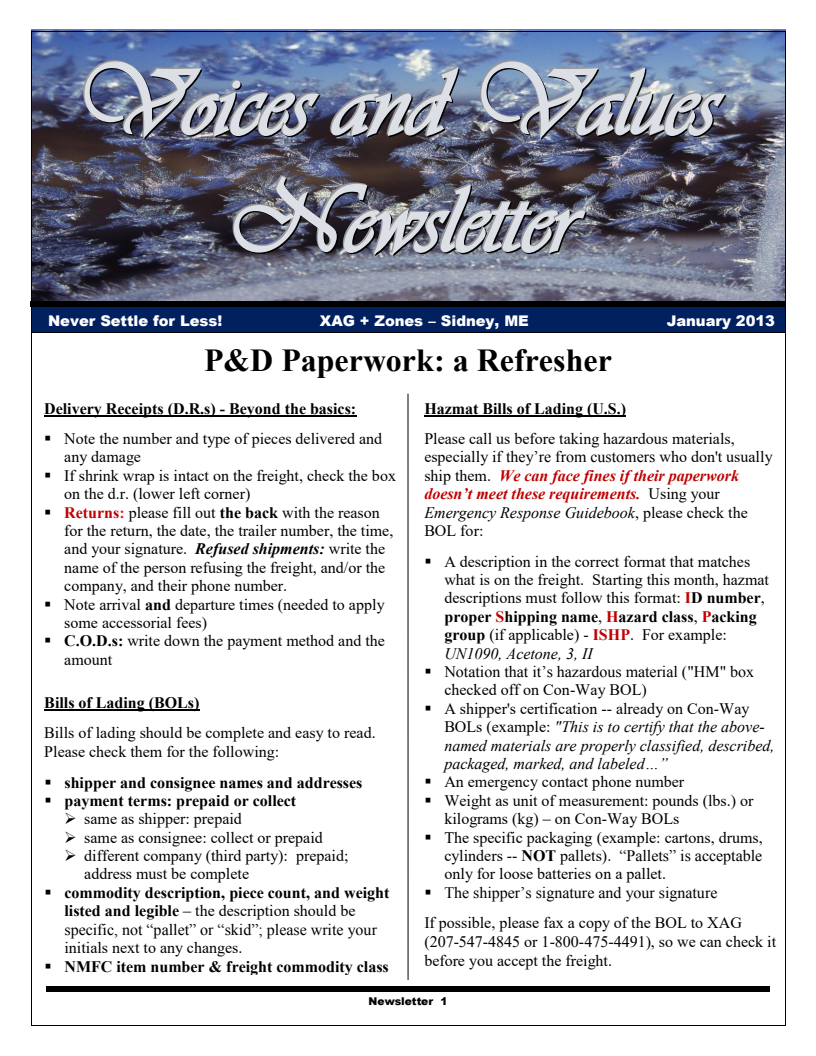
As in this issue, industry newsletters can contain jargon familiar to staff, but which confuses outsiders. (In this case, “p&d” refers to “pick up and delivery.”
The simple two-column two-page format featured tips and advice and items of interest. Recognizing employees for efforts like a Christmas food drive boosted morale.
How Do You Write a Good Newsletter for Your Company?: Company Email Newsletter Examples
Ragan’s annual Employee Communications Awards recognizes internal communications campaigns and initiatives. Ragan recently celebrated Mower’s mental health employee communications campaign.

In 2023, Advocate Aurora Health won for their targeted e-newsletters sent to their 75,000+ team. Through storytelling, they connect employees to their purpose. Newsletters like “The Leader” and “Nurse Forward” are sent to different departments. They archive them on an intranet, achieving high open rates and improving internal communication.
Checking Company Newsletter Results
ContactMonkey, a Ragan Communications company, reports there are 15 email metrics to track. Their annual report features average email metrics for 20 industries. They include open, click-through, and click-to-open rates.
To check your e-newsletter performance, track any metrics available. Adjust the content as necessary based on feedback and engagement.
| Industry | Open Rate | Click-through Rate | Click-to-Open Rate |
| consulting | 79 percent | 9 percent | 10 percent |
| financial services | 75 percent | 13 percent | 17 percent |
| hospital/healthcare | 66 percent | 10 percent | 14 percent |
Benefits of a Company Newsletter
Internal newsletters support a stronger, more engaged workforce. Now that you know how to write a good newsletter for your company, you can start fostering communication and community.
If you lack time to create your company newsletter, explore my email marketing packages or get a free audit.