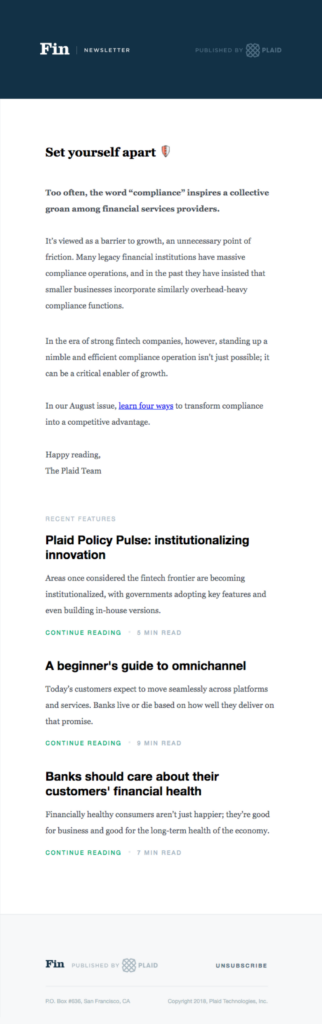
What Are the Elements of an Effective Business Newsletter?

An effective business newsletter contains a clear format, design, and writing. Yet many business promotion emails don’t follow this best practice, potentially losing sales.

With ten years of experience, I’ve used clear email content and a simple layout to enhance engagement. If you struggle to keep publishing, see my e-newsletter packages or get a free audit.

How Email Marketing Helps Business

  • Repeat advertising – Consistent e-newsletter marketing builds brand awareness, trust, and customer relationships. Per the Marketing Rule of 7, the average customer must see a message at least seven times before they will buy.
  • Cheap, competitive advertising: Compared to other marketing channels, it’s among the most affordable. A low-cost email campaign that yields sales can turn a profit.
  • Easy access to metrics: you may check open, click-through, or response rates quickly to measure your campaigns’ results.
  • Targeted and personalized messaging: segment your list by customer demographics, behavior, and interests. Emails with personalized subject lines are 26 percent more likely to be opened.”
  • Direct marketing: Automated email campaigns nurture existing leads through the sales funnel.
  • Brand loyalty: engaging content keeps readers interested in your offerings, helping you build long-term bonds with them. According to a March 2024 Constant Contact study, the average open rate across all industries is 38 percent. 

What is An Effective Business Email Marketing Strategy?


An effective business email marketing strategy includes strong visuals. A young woman in a suit looking at the screen of a large tablet PC showing graphs and charts.

Start by defining your email goals. Do you want to highlight your expertise? Showcase your products or services?

Aligning content to clients’ needs guides them through the sales funnel effectively. Address readers at all stages of the buyer’s journey. Offer educational material for those becoming aware and more in-depth information for readers exploring their options.

Elements of Effective Business Newsletters

  1. Subject Lines
  • Use clear, concise language
  • Add power words, numbers, scarcity, or other emotion-evoking methods to attract attention

Example: 5 Little-Known Tax Strategies for Small Businesses

  1. Structure
  1. Engaging Content

Example: Share a client success story highlighting your expertise

  1. Personalization

Segment your email list and customize content based on readers’ interests and behaviors.

“To make e-newsletters more appealing to readers, it is important to customize content based on customer preferences, past interactions with them, and their specific requirements. Similarly, you may want to segment your email lists so you can send targeted messages that resonate with different kinds of people within these industries.”

Keran Smith, co-founder and cMo, lyfe marketing
  1. Readability

Ensure accessibility by using descriptive alt-text, proper color contrast, and easy-to-read fonts.

A focused approach — for any business, regardless of the type or size — yields content that connects and inspires action.

What is An Effective Business Email Marketing Template?

The downsides of e-newsletter marketing include the perception that emails are spam and “list fatigue,” when subscribers lose interest in your messages. To minimize these issues, follow these best practices:
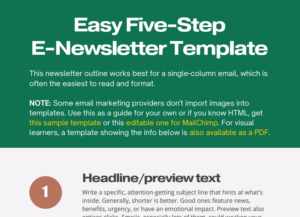
A partial view of the Easy Five-Step E-Newsletter Template.
  1. Quality: a layout should include mobile-friendly design and accessibility features. Responsive design automatically adapts the layout and content to fit any screen size, ensuring it’s readable on smartphones and tablets.
  2. Template Options:
    • Basic Layouts: Simple structures for easy content organization.
    • Industry-Specific: Imagery and layouts relevant to your field.
    • Multimedia: For videos and interactive content.
    • Curated Content: Information culled from various sources.
    • Product/Service Showcase: Highlight products, services, and special offers.
    • Event Promotion: Designed for upcoming promotions.

3. Text and Visuals: Put the most important information at the top to maximize engagement.

4. Legally-Compliant Footers: Anti-spam laws like CAN-SPAM (U.S.) and GDPR (Europe) ensure responsible email marketing.

Resources:

Many email marketing platforms offer customizable templates for professional, attractive, and on-brand newsletters.

What is a Sample Business Newsletter?

The Ann Arbor SPARK (AAS) e-newsletter follows many of these best practices:

  1. Compelling Headline: Entice readers to open the email.

Instead of their usual headline, “Check out these upcoming events in Ann Arbor!,” AAS could feature an event or a common theme.

Example: 14 Must-Do May Events in the Ann Arbor Area

It copies the headline of one of the feature articles (only cutting and pasting is required 🌝).

  1. An Engaging Content Structure: A clear and concise layout with informative, audience-focused information (e.g., news, testimonials, CTAs).
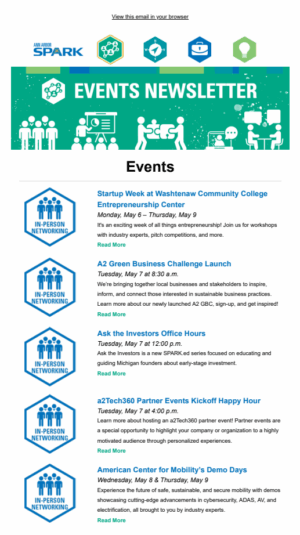

Among the newsletter examples for business: The Ann Arbor SPARK e-newsletter features a clear layout coupled with eye-catching design and content.

The clear format, with colorful headings and images separating the events from the features, ignites interest. The events section could be organized into two columns by date to reduce scrolling.

  1. Visual Appeal: Quality images, consistent branding, and readable fonts foster engagement.

The AAS e-newsletter engages well. But larger heading text, descriptive alt-text for images, and more instructive CTAs (beyond “Read More”) could enhance accessibility and interest. The CTA “lead in” text, however, emphasizes the benefits readers can expect well.

The AAS e-newsletter is one of the best newsletter examples for business. It effectively merges a clear layout with impactful visuals to form a must-read message.

Effortless Business E-Newsletter Creation

Making a newsletter without proper tools is like baking a cake from scratch — it’s time-consuming. With the elements of an effective business newsletter, you can create your own faster.

If you’re unsure where to start or lack time, explore my e-newsletter packages or get a free audit.

What Are The Best Health and Wellness Newsletters?

The best health and wellness newsletters feature accurate and informative content from credible sources. A trustworthy, well-written health e-newsletter requires attention to detail. It avoids unfounded claims, separates facts from opinions, and shows information sources clearly.

As a health writer, I turn technical terms into easy-to-read language. If you struggle to create a newsletter everyone can understand, consider my e-newsletter packages or get a free audit.

What Are The Best Health and Wellness Newsletters?

The top health newsletters for consumers are trustworthy and informative. The World Health Organization (WHO) and Harvard Health Publishing create some of the most acclaimed emails. Among the best free healthcare newsletters, many lesser-known options are equally noteworthy.

Let’s explore some providers’ emails, including their focuses, audiences, and unique value propositions.

What Are Some Health Newsletter Examples?

DFD Russell Medical Centers Newsletter

  • Focus area: healthy living and maintaining good health
  • Target market: Middle-aged and older adults
  • Unique value proposition: practical tips for healthy living (implied from the content and the bottom tagline)
The DFD Russell Medical Centers features plenty of health and wellness newsletter ideas. It's among the better hospital newsletter examples.

The DFD Russell Medical Centers newsletter is among the best hospital newsletter samples. Each of their e-newsletters features a simple format and clear content on disease prevention.

The advice is based on well-known medical expertise and principles. Possibly to appeal to short attention spans, it lacks depth, and much of it is generic.

Trustworthy content establishes credibility. DFD could quote experienced staff members and link back to data sources to add credibility. They try to convey it through showing awards from The Health Resources and Services Administration.

The single-column format features graphics, distinct headlines, and white space for breathing room. Their appealing logo could be smaller. The pastel color scheme adds a sense of lightness throughout.

To improve accessibility, a few elements could be added or enhanced:

  • “Alt-text” could be added to the image descriptions.
  • Colors that contrast better could fill the call-to-action buttons.
  • The text size could be larger and in a sans-serif font.
  • The recipe image header could be removed in favor of a text heading.

To comply with CAN-SPAM laws, the main physical location of the center could be added to the footer. Other improvements include more persuasive CTA text and adding social media/website icons to the top to boost clicks.

This attractive e-newsletter promotes healthy living effectively. As light reading, it likely engages its audience.

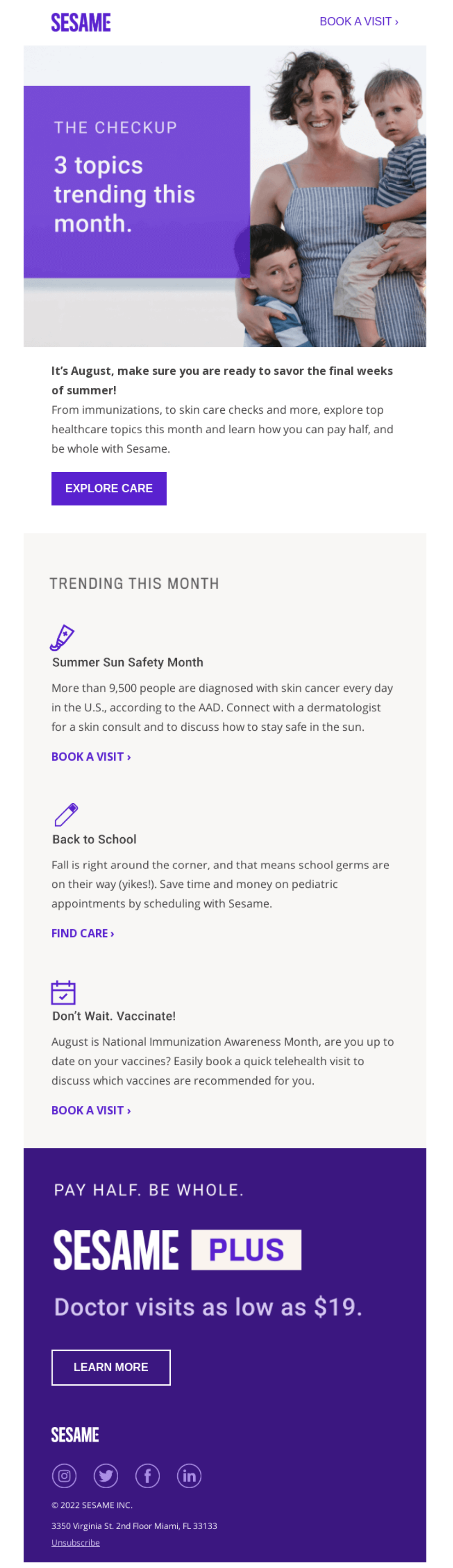
SESAME's email blast covers a variety of health newsletter topics.

SESAME

  • Focus area: healthcare screenings and events
  • Target market: patients looking for low-cost same-day care with certified providers
  • Unique value proposition: Affordable, quality care

This short email stays on brand throughout, highlighting SESAME’s affordable care options. It features a blog, seasonal topics, and links to related care. The clear call-to-action promotes low-cost doctor visits: “pay half, be whole.”

The design scheme uses only a few colors. Few newsletters place calls to action at the top. SESAME provides an effective example. To maximize where readers tend to look, they could move it more toward the top left.

There are a few opportunities to boost engagement. For instance, the final CTA text could be clearer and more interesting, suggesting readers discover how to save.

To build trust and credibility, the content could feature less style and more substance, through providers’ advice or patient success stories. This content can sometimes sell as well, and work alongside persuasive copy. Placing a second social media icon bar could entice more clicks.

The e-blast effectively promotes SESAME’s unique value proposition of low-cost access to healthcare.

What Are Some Health and Wellness Newsletter Ideas?

The newsletters above offer good examples of potential topics. Some health newsletter topics for certain niches that are adaptable to related sectors:

Nutrition

  • 9 Signs of Common Nutrient Deficiencies
  • What Are The 7 Types of Nutrition?
  • How to Eat a Balanced Diet

Mental Health

  • 7 Quick Ways to Calm Anxiety
  • 9 Mental Health Myths Debunked
  • How to Talk to a Child About an Addiction

Preventive Care

  • Are Your Health Screenings Current?
  • Preventive Care: What’s Free and What’s Not
  • The Differences Between Wellness and Preventive Care

Possible regular columns for these topics:

  • Q&A with experts
  • upcoming health classes
  • healthful recipes

Informative content is crucial for effective health and wellness newsletters that enhance readers’ knowledge and decision-making. Research has found newsletters can influence readers’ health knowledge, attitudes, and motivation, and affect changes in their behavior.

“Exclusive offers through discounts or packages on health care services such as professional consultations should be highlighted or introduce new services so that customers will become curious enough to explore them further.”

keran smith, co-founder and cmo, lyfe marketing

Writing a Health and Wellness Newsletter

Engaging healthcare newsletters balance well-researched, HIPAA-compliant content with a reader-friendly format and tone. They also use credible information and follow privacy guidelines.

To prevent potential claims, add a disclaimer stating the information isn’t medical advice. Also, avoid false advertising claims and when using secondary sources, respect intellectual property rights.

Misinformation, bias, and unsubstantiated claims abound online. Verify the accuracy and objectivity of information sources. Reliable sources include government websites like the Centers for Disease Control and Prevention, National Institutes of Health, and MedlinePlus.

When citing data, use the most up-to-date and authoritative primary sources like peer-reviewed journal articles and data from reputable organizations. Include complete citation details like authors, titles, publication dates, and website links. Quote or summarize the information precisely to give credit and maintain reliability.

Knowing how to write a newsletter article can prepare you for writing a business newsletter or how to create a professional email newsletter.

The Best Health and Wellness Newsletters Feature Engaging Content

Professionals’ and patients’ experiences enhance the best health and wellness newsletters. This unique advice also builds trust and credibility and helps them stand out.

If crafting an engaging health newsletter takes too much time, consider my e-newsletter packages or get a free audit.
What Should Be Included in a Business Newsletter?

The question, “What should be included in a business newsletter?” can be hard to answer. The many possibilities toughen decision-making. But it’s possible to save time while you create engaging content that shows your expertise.

If you struggle to make newsletters that set your business apart, consider my email marketing packages or get a free audit.

What Business Newsletter Content Should You Include?

Good topics suit your business and content goals. You can inform potential clients about your products or services. You may also reuse or reframe social media posts, blog posts, or press releases.

Newsletter Ideas for Business Based on Your Goals

What are your customers’ problems? What keeps them awake? Relieve their pain through stories, quotes, or advice.

  • Brand awareness: Share your company culture through a video or a personal story. Promote a grand opening or an annual sale.
  • Lead-generation: Offer resources like ebooks, checklists or guides, free trials, or webinars; add “how-to”s or tips.
  • Planning: Creating a content calendar maintains consistency, aligning your content with your marketing goals.

How Do You Make a Company Newsletter Interesting?

Match your content to each buyer’s journey stage (awareness, consideration, decision-making).

Eye-tracking studies show people read online in an F-shaped pattern, focusing on the top and left side. A good outline for informational text follows the AIDA format (attention-interest-desire-action). Another option is an inverted pyramid with a one-column layout, placing the most important information at the top. It aids skimming and scrolling on all devices.

Crafting Engaging Business Newsletter Topics

  • Enticing Headlines: Write headlines that spark interest. Refine them based on A/B tests in blog or social media posts first. Use strong verbs, numbers, and benefit-driven language.
  • Engaging Preview Text: Provide a concise, compelling content summary in 150 or fewer characters.
  • Visual Appeal: Add clear images, infographics, or videos to break up text and enhance readability.

What Should Be Included in a Business Newsletter – Content Examples

A series of business newsletter-themed icons that show what should be included in a newsletter, such as envelopes and charts and graphs in white and shades of orange, blue, and gray.

Maximize Trends: With Google’s AMP technology, you can make emails interactive through polls, games, or forms to boost engagement and gather data.

Predictive personalization lets businesses tailor emails based on reader behavior and preferences. You can promote products or services based on recent buying patterns.

Example: a coupon for a discount on investment planning after an initial consultation.

Content curation: using AI or other platforms helps you highlight topics efficiently. Personalize the content based on readers’ preferences.

“One effective strategy I’ve implemented is leveraging content repurposing. By repurposing existing blog posts, case studies, or industry insights into digestible newsletter formats, you can streamline the creation process while delivering valuable content to your audience.”

Gustav Nicholson, editor, Ampifire

How Do You Write a Business Newsletter?

Experts suggest e-newsletters should be 300 words or fewer to accommodate short attention spans. Many newsletters are slightly longer, at an average of 500 to 700 words.

How to Write a Business Newsletter

Key parts to write:

  • Headlines: Make a statement. Example: People are overdosing on coffee ☕️ (Touristy)
  • Compelling Body Copy: Write clear and informative articles, drawing on your experience; highlight a tip, a blog post, or an offer.
  • Clear calls-to-action: Tell readers what you want them to do and emphasize what they’ll get. Should they visit a link for more information, download a checklist, or register for a webinar? Example: “Teach yourself all the tools and techniques you need to support your mental health” (Calm; Calm Down e-newsletter)

For e-newsletter content writing tips, explore Writing a Business Newsletter. Learn How to Write a Newsletter Article for Business, How to Write a Professional Services Newsletter, or How to Write a Law Firm Newsletter.

What Are Corporate Newsletter Best Practices?

Keep a regular publishing schedule. Choose optimal sending times based on your audience demographics.

  1. Set expectations on your “Subscribe” page. Tell potential subscribers what to expect in each issue and how often you will send it.
  2. Use email platforms like MailChimp or Constant Contact for mobile-friendly designs.
  3. Accessibility: Add clear “alt text” for images, text instead of graphics, and follow Web Content Accessibility Guidelines. Use complementary colors and sans serif fonts (12 to 16 points).

Monitor and Analyze Results: Track open rates, click-through rates, and unsubscribes. Use this data to refine your strategy and deliver interesting content. MailChimp reports that the average business e-newsletter open rate is about 37 percent.

A/B Testing: It’s sometimes limited in its scope. Consider factors like audience demographics and sample sizes when you assess the results. GetResponse suggests you follow data, not your gut feelings.

  • Permission-Based Marketing: Follow GDPR (Europe), CASL (Canadian Anti-Spam Law), and CAN-SPAM Act (U.S.) best practices. Under CAN-SPAM, ensure subscribers have opted to get your newsletter. Provide your company’s physical mailing address and clear unsubscribe options.
  • Segmentation: If you tailor content to different audiences (job role, industry, etc.) send it to separate lists.
  • Send from a recognized name rather than “ABC Widget Company” to avoid spam filters and foster trust.

These ideas can be adapted to different types of businesses and industries.

How to Make a Company Newsletter Interesting

A well-crafted newsletter is a long-term investment in your client relationships. Now that you know what should be included in a business newsletter, you can drive engagement, build trust, and reach your goals.

If you struggle to create standout newsletters, consider my email marketing packages or get a free audit.